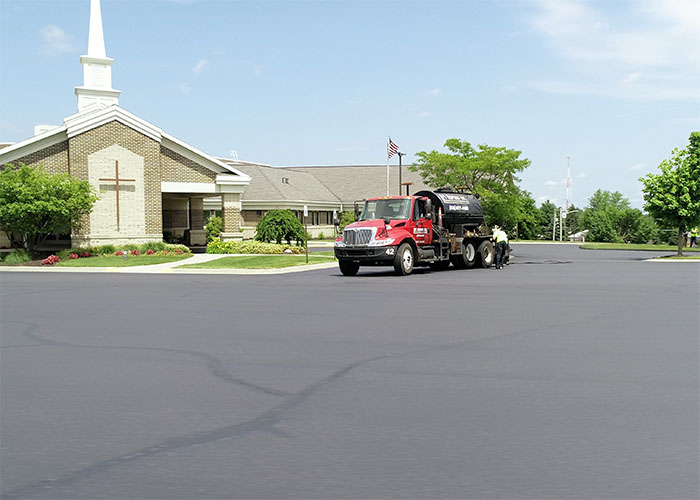
Commercial asphalt parking lots experience constant wear from vehicle traffic, weather exposure, drainage issues, and seasonal freeze-thaw cycles. Over time, even well-constructed asphalt surfaces can develop cracks, potholes, and other forms of deterioration that affect both appearance and safety. Many property owners contact our asphalt parking lot repair company in Greater Grand Rapids, MI, to better understand when repairs are necessary and what types of solutions are available.
Here are answers to some of the most common questions about parking lot repair and asphalt maintenance.
What Causes Parking Lot Damage?
Parking lot damage develops for several reasons. Heavy traffic, water infiltration, UV exposure, temperature fluctuations, and aging asphalt all contribute to pavement deterioration over time.
In Michigan, freeze-thaw cycles are especially damaging because water can enter small cracks, freeze, expand, and gradually weaken the pavement structure. Without timely repairs, minor surface issues can quickly grow into larger and more expensive problems.
Routine maintenance plays an important role in slowing asphalt deterioration.
What Are Common Signs That a Parking Lot Needs Repairs?
Several visible warning signs may indicate that asphalt repairs are needed, including:
- Surface cracks
- Potholes
- Fading asphalt color
- Uneven pavement
- Pooling water
- Crumbling edges
- Surface depressions
Addressing these issues early can often help prevent additional structural damage and extend the lifespan of the .
Are Small Parking Lot Cracks Really a Problem?
Yes. Even small cracks should not be ignored because they allow moisture to penetrate beneath the asphalt surface. Once water enters the pavement structure, it can weaken the base layer and contribute to further cracking, potholes, and instability.
Crack sealing and preventive maintenance help reduce water infiltration and protect the integrity of the pavement.
Repairing smaller problems early is usually more cost-effective than waiting for widespread damage to develop.
What Is the Difference Between Patching and Resurfacing?
Asphalt parking lot patching typically focuses on repairing isolated areas of damage such as potholes or localized pavement failure. This process removes damaged asphalt and replaces it with new material in the affected area.
Parking lot resurfacing, on the other hand, involves replacing the entire surface layer of pavement. Resurfacing is often recommended when the lot has widespread surface wear but still maintains a stable foundation underneath.
The right solution depends on the overall condition of the parking lot.
How Often Should Parking Lots Be Inspected?
Routine inspections help identify problems before they become more severe. Many commercial property owners benefit from periodic asphalt evaluations to monitor cracking, drainage performance, and surface wear.
Catching problems early may help reduce long-term repair costs while improving safety and curb appeal.
Parking lots with high traffic volumes or heavy commercial vehicles may require more frequent monitoring and maintenance.
Does Weather Affect Asphalt Repairs?
Yes. Weather conditions play a major role in both asphalt deterioration and repair scheduling. Asphalt repairs are typically most effective during warmer months when temperatures allow proper material bonding and curing.
Delaying repairs during harsh weather conditions may allow damage to worsen further, especially during winter freeze-thaw cycles.
Planning proactively often helps property owners avoid larger pavement failures later.
Why Is Asphalt Maintenance Important?
Preventive maintenance helps maximize the lifespan of asphalt pavement while reducing the likelihood of costly reconstruction projects. Services such as crack sealing, sealcoating, drainage corrections, and timely patching help protect the surface from ongoing deterioration.
Maintaining a parking lot also improves property appearance and creates a safer environment for customers, employees, and visitors.
When Should Property Owners Schedule Repairs?
The best time to schedule parking lot repairs is often before damage becomes severe. Waiting too long may allow water infiltration and structural deterioration to spread beneath the surface.
Get a Quote for Parking Lot Repair
If your commercial pavement is showing signs of wear, contact our asphalt parking lot repair company in Greater Grand Rapids, MI, to schedule an evaluation and learn more about customized asphalt repair and maintenance solutions for your property. Call A-1 Asphalt at (616) 877-4400 or contact us online.